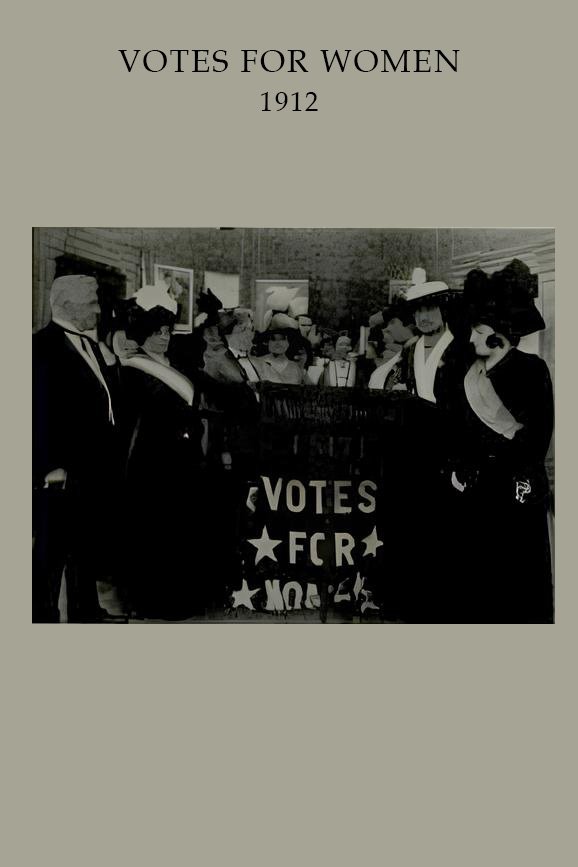
The feature that has the support of every suffrage organization in the country.
Named by historian Kevin Brownlow as “the first important suffrage film”, this melodrama follows suffragist May Fillmore in her fight to sway Senator Herman, whose vote could pass a key reform bill. After exposing him and his fiancée Jane Wadsworth to the dire living conditions of a motherless tenement family—unsanitary housing, child labor, and workplace exploitation—Jane turns against her negligent fiancé and joins the suffrage cause. Ultimately, both Herman and Jane’s father are persuaded to support reform, and the film ends with the characters proudly taking part in a suffrage parade. (Note: This silent narrative film is distinct from Edison’s Votes for Women (1913), a Kinetophone short that recorded real suffragist leaders delivering speeches.)
Harriet Laidlaw
Writer
Hal Reid
Director
Frances Maule Bjorkman
Writer
Mary Ware Dennett
Writer

Edgena De Lespine
Jane Wadsworth

Gertrude Robinson
Sue Balfour
Pearl Egan
Gladys Egan
Charles Herman
Edward P. Sullivan
J.W. Backus
Jane Addams
Self
 Selma73%
 On the Basis of Sex73%
 Iron Jawed Angels67%
 Suffragette71%
 Misbehaviour63%
 Nuremberg75%
 An Officer and a Gentleman70%
 Joy69%
 Miss Sloane74%
 Young Woman and the Sea78%
 The Red Pill75%
 Hamnet77%
 Judgment at Nuremberg79%
 Jane Fonda in Five Acts71%
 The Beguiled59%
 Lady Bird72%
 Goodbye June65%
 Steel Magnolias71%
 The Corporation76%
 The Rainmaker70%